

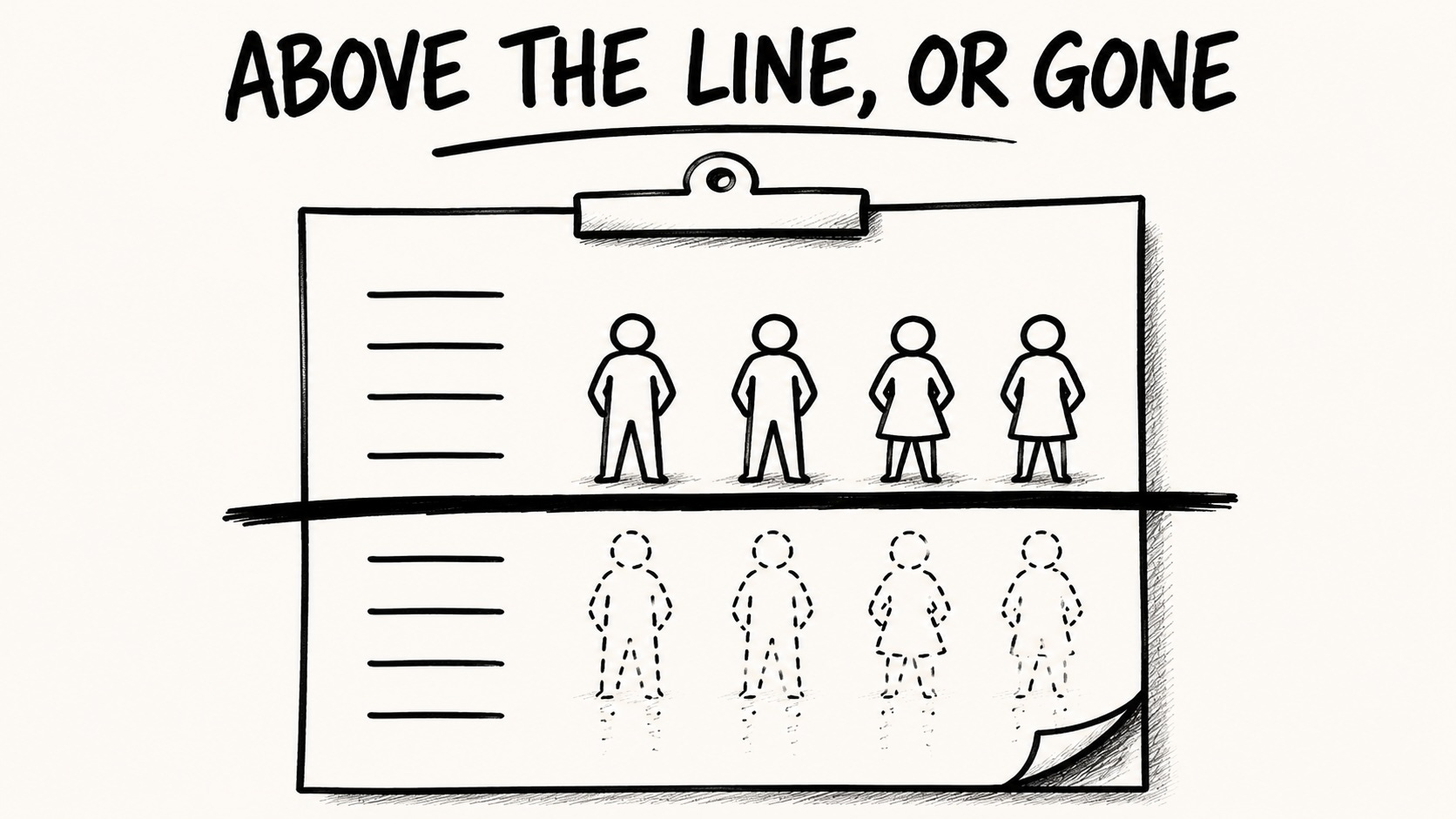
Watch what happens when the budget gets tight. A company that was happily paying for coaches, consultants and transformation experts suddenly has a spreadsheet open — names in rows, day rates in a column, and someone drawing a line across the middle. Above the line, renewed. Below it, gone. And here is the uncomfortable truth almost nobody says out loud: the people who fall below that line are very often not the least talented. They are the least visible.
I have watched brilliant coaches vanish and average ones survive, and the difference had almost nothing to do with skill. So let me name what actually separates the renewed from the released — because once you see it, you can act on it long before the line gets drawn near your name.
The three comfort zones that get you cut
Start with the anti-patterns, because they’re everywhere. There’s the coach who behaves like visiting royalty — the superstar on site who arrives radiating “aren’t you lucky to have me”, pass them the ball and they’ll score. There’s the coach who simply won’t work hard: flown in for a workshop, no preparation done, improvising a “future retrospective” on the spot and abandoning it when it dies in the room. And there’s the one who mistakes the manual for the magic — delivering retrospectives and boards by the book like Moses handing down tablets, convinced the ritual alone proves their worth.
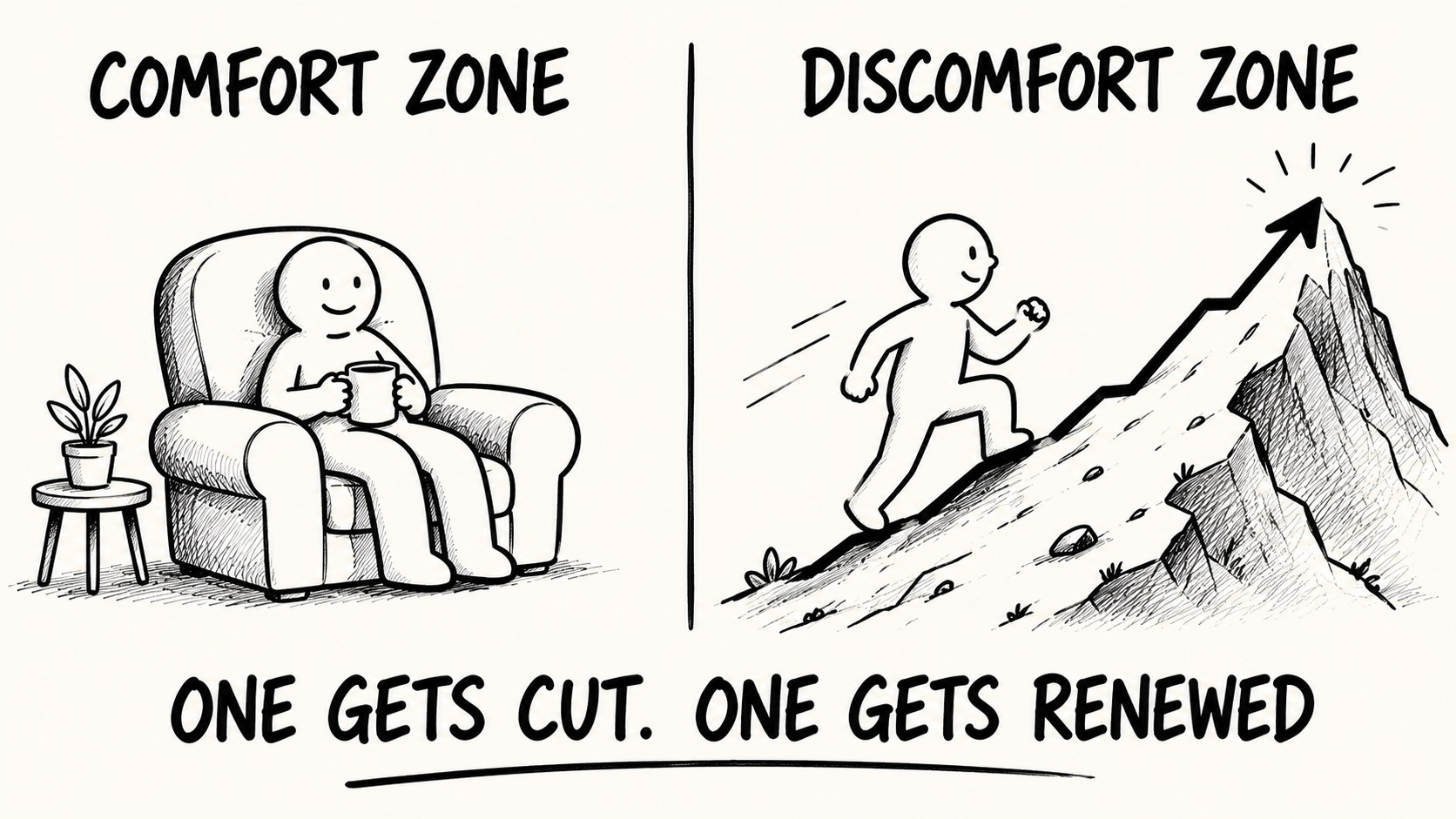
Look closely and these three share one gene: they are all comfort zones. One coasts on status, one on effort, one on a script. And a comfort zone feels wonderful right up until the year the money tightens — at which point the comfortable are, with grim reliability, the ones who go. So the whole game is to do the opposite of comfortable. Here is what that looks like in practice.
Deliver value — then have the courage to shout about it
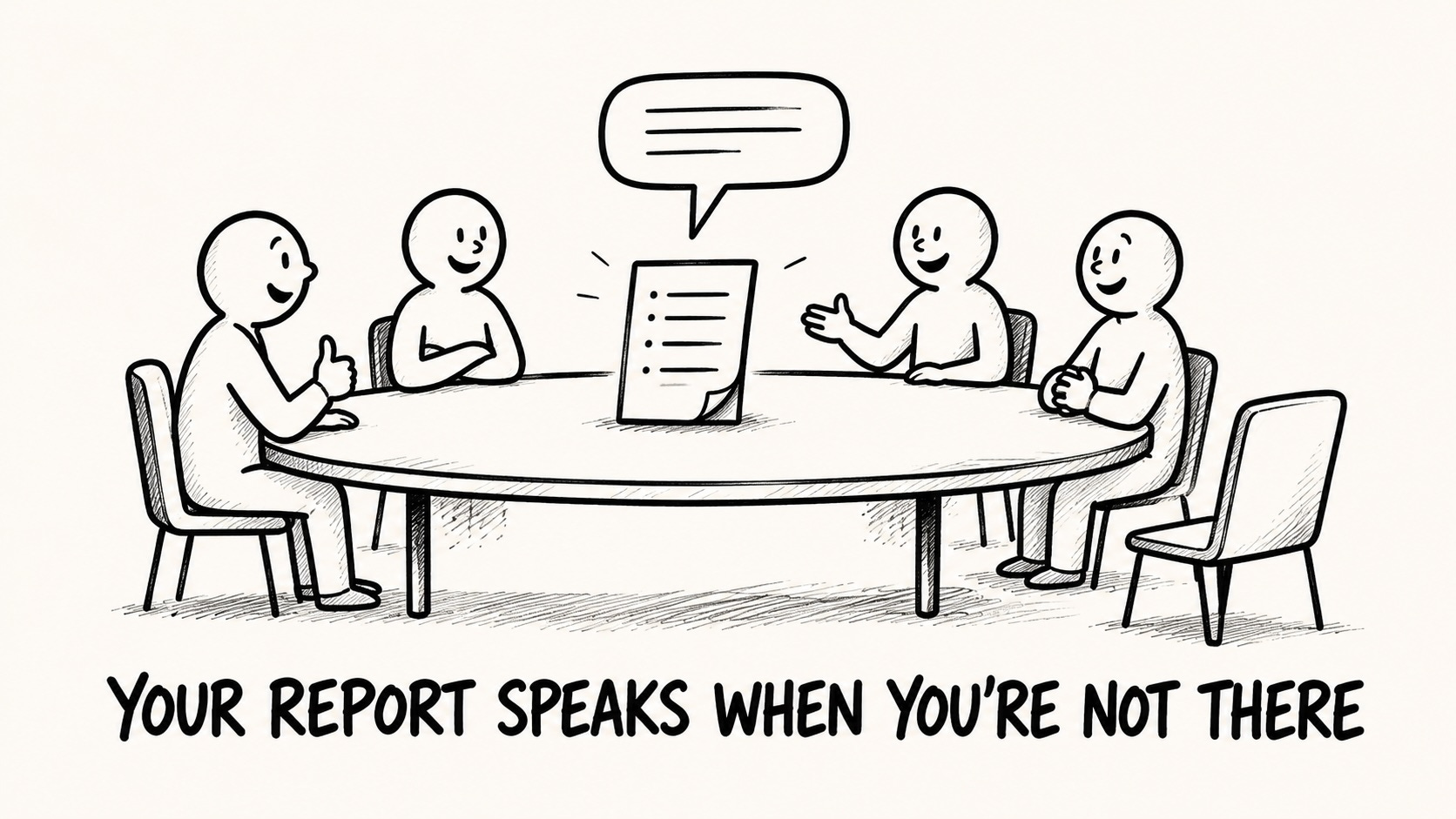
The first trait is the one people find most distasteful, which is exactly why it works. Delivering value is table stakes; plenty of coaches deliver enormous value. But value delivered in silence is value nobody can defend. The room where your renewal is decided is a room you are never in — so you have to send an advocate ahead of you, and that advocate is a report.
Produce a monthly one-pager, in the client’s own format, that shows what has actually changed. Do it well enough and something quietly magical happens: your slides start turning up inside their decks, because it’s easier to reuse yours than build their own — and now you’re being talked about in rooms you’ll never enter. The value can be anything real: cost saved, time to market, customer stickiness, even a smart experiment that failed and taught the organisation something. But it needs a number, and numbers need a baseline. That takes nerve: plant a flag early — “these are the metrics we will move” — because in six months nobody remembers how many bugs there used to be or how long a release took, and they’ll assume it was always this good. Capture the before, or you forfeit the credit for the after.
Underneath all this sits a deeper problem: the people holding the purse strings usually don’t understand what coaches do for a living. Budgets get set by project managers, the books allocate ten percent for “management overhead”, and coaching gets squeezed as a nice-to-have. So don’t only report the value — advocate for the category. I once put a client’s own words on a slide: “every time we meet, you double my output.” Multiply that across thirty people on six-figure salaries and the ROI writes itself. I’ve sat opposite a CFO and asked, plainly, “is anyone else here delivering a better return on investment than me?” The answer was no. That isn’t arrogance; it’s refusing to be a silent line item. The market’s problem isn’t coaches talking too much — it’s coaches saying nothing at all.
Be a continuous learner — the word that matters is “coach”, not “agile”
The second trait is where most people nod along and then do nothing. When an Agile coach asks me how to survive, I point at their own job title. The operative word is coach. Agile is just the subject you happen to know. So coach other things — coach AI, coach product, coach coding, coach whatever the organisation actually needs next.
This is uncomfortable by design — it means being a beginner again, on purpose, forever. I know someone who takes a proper accredited course every single month. Think of Steve Jobs slipping into calligraphy classes he had no “reason” to attend, then baking that obsession with typefaces into Apple years later. I know a coach who earned an HR accreditation with no immediate purpose and, years on, could drive change as a genuine peer to HR that no outsider could. The learning doesn’t have to be aligned to today’s job. It has to keep you moving — and it makes you distinctive, the thing on your card nobody else has.
I became a Belbin and a Leadership Circle practitioner, did Oxford’s executive leadership programme, spent a whole Christmas teaching myself to vibe code. Last week a new colleague spotted “Leadership Circle practitioner” and it opened a door I’d never have found otherwise. So book the time: I put two one-hour “L3” — lifelong learner — slots in my diary every week. When I shared that with a room of a hundred entrepreneurs in Africa, of everything I said all week that was the line they all wrote down. The question that never stops paying off is simply: what am I going to learn this month?
Build your network — with a framework, not a good intention
The third trait is the one introverts dread, so make it mechanical. “I should network more” achieves nothing; a repeatable process does. On LinkedIn I send five connection requests a day, and the message is deliberately, disarmingly neutral: “LinkedIn suggests we connect because we’ve got things in common — are you interested?” No pitch, nothing to reject. About one a day accepts, the algorithm learns who you’re chasing, and the pipeline snowballs. While you’re there, write one article that says what you actually stand for, and pin it. I advised someone facing redundancy to do exactly that; his pinned piece became his calling card and he landed three offers.
Inside a company it’s the same discipline aimed at the people who hold the spreadsheet. Find out who sits in those rooms and get your name off the page and into their memory: “Hi, you popped up in a meeting — fancy a coffee?” I once messaged a CEO simply asking how I could add more value while I was there. He ignored two invitations, then booked me himself — and opened with, “you’re the only coach who ever asked me that.” A number on a sheet has no defenders. A person people know doe
The through-line
My email signature now reads:
I use AI, agile, lean and product thinking to get stuff done and help others do the same. Sometimes, to get stuff done, I help others see the world differently, but it's to help them get stuff done.
Only one phrase repeats — “get stuff done” — and that’s deliberate, because in the end this is about delivery. Renewal, promotion, a rising rate: they all flow to the people who embrace discomfort — delivering value visibly, developing themselves relentlessly, building a network beyond their team. The comfortable have an easy year. The uncomfortable have a career.
Five Takeaways
1. Comfort zones are what get you cut.
The superstar, the coaster and the by-the-book ritualist look different but share one flaw — all three are comfortable. Comfort feels great until the budget tightens, and then the comfortable are reliably first out. Renewal belongs to the people who deliberately choose discomfort instead.
2. Silent value is value you can’t defend.
Your renewal is decided in a room you’re never in, so send a report in your place. A monthly one-pager in the client’s own format ends up inside their decks and advocates for you when you’re absent. Delivering value isn’t enough; making it visible is the job.
3. Plant your metrics flag early — it takes nerve.
People forget how bad things were and assume it was always this good, so you lose credit for change you can’t measure. Capture the baseline at the start — bugs, cycle time, cost — and commit publicly to moving it. Courage up front is what makes the ROI undeniable later.
4. The word that matters is “coach”, not “agile”.
Your method is just the subject; coaching is the transferable skill. Coach AI, product, coding — whatever the organisation needs next. Learn something new every month, block “lifelong learner” time in your diary, and collect the distinctive credentials nobody else on the spreadsheet has.
5. Network with a framework, not a good intention.
“I should connect more” does nothing; five neutral LinkedIn requests a day compounds. Pin an article that says what you stand for. Inside the company, get coffee with the people who hold the spreadsheet — a name they recognise survives the cut, a number they don’t never does.
Your Leadership Transformation Starts Here
Thanks for reading. If the line-across-the-spreadsheet moment resonated with you, here are three ways to go deeper:
🎧 Listen to the full conversation: This article was drawn from insights on my Future of Work podcast. Hear Ian Banner and Steve Forbes unpack why comfortable coaches get cut, and the three discomfort-embracing habits that keep the valuable ones in the room →
📬 Get weekly frameworks: Join 2,400+ transformation leaders who receive my newsletter every week. Each edition includes one actionable framework you can implement immediately to build agile leadership capabilities in the knowledge economy.
🤝 Work together: I help C-level executives and transformation teams navigate digital change and build varifocal leadership capabilities. Book a strategic conversation.
Want more on making your value visible? Read The Weekly Report Revolution: How AI Transforms Your Most Dreaded Professional Task Into Strategic Gold — practical patterns for turning the humble status report into the advocate that speaks for you when you’re not in the room.
For all episodes, articles and show notes, visit futureofwork.site or linktr.ee/ianbanner.