


It’s 9 AM on a Tuesday. You’re in a critical steering committee meeting, and the entire conversation grinds to a halt. All eyes turn to you. Someone asks a question about a technical dependency, a budget detail from last quarter, or the status of a tangential project. You know the answer. You always know the answer.
So you provide it. The meeting moves on. You get a subtle nod of approval, a silent thank you for being the ‘go-to person.’ It feels good. That little hit of dopamine confirms your value. You are indispensable.
But what if being indispensable is the single biggest threat to your organisation’s transformation? What if your encyclopedic knowledge and heroic problem-solving are actually creating fragility, dependency, and a team of passive observers?
Early in my career, I thrived on being the firefighter. I was the one who could parachute into a crisis, work 70 hours, and emerge with a solution. I wore my burnout like a badge of honour. But as I moved into leadership, I noticed a terrifying pattern: the more fires I put out, the more fires seemed to start. My team wasn’t learning to prevent them; they were just getting better at calling me.
I wasn’t a leader; I was the ultimate bottleneck. I was the hero of a story that was doomed to fail.
This realisation forced me to develop a new leadership capability: Strategic Declination. It’s not about saying ‘no’ to be difficult; it’s a systematic process for transforming inbound requests from personal tasks into catalysts for building systemic capability. It’s the shift from being the hero who saves the day to being the architect who designs a system where the day doesn’t need saving. This four-step system is how you do it.
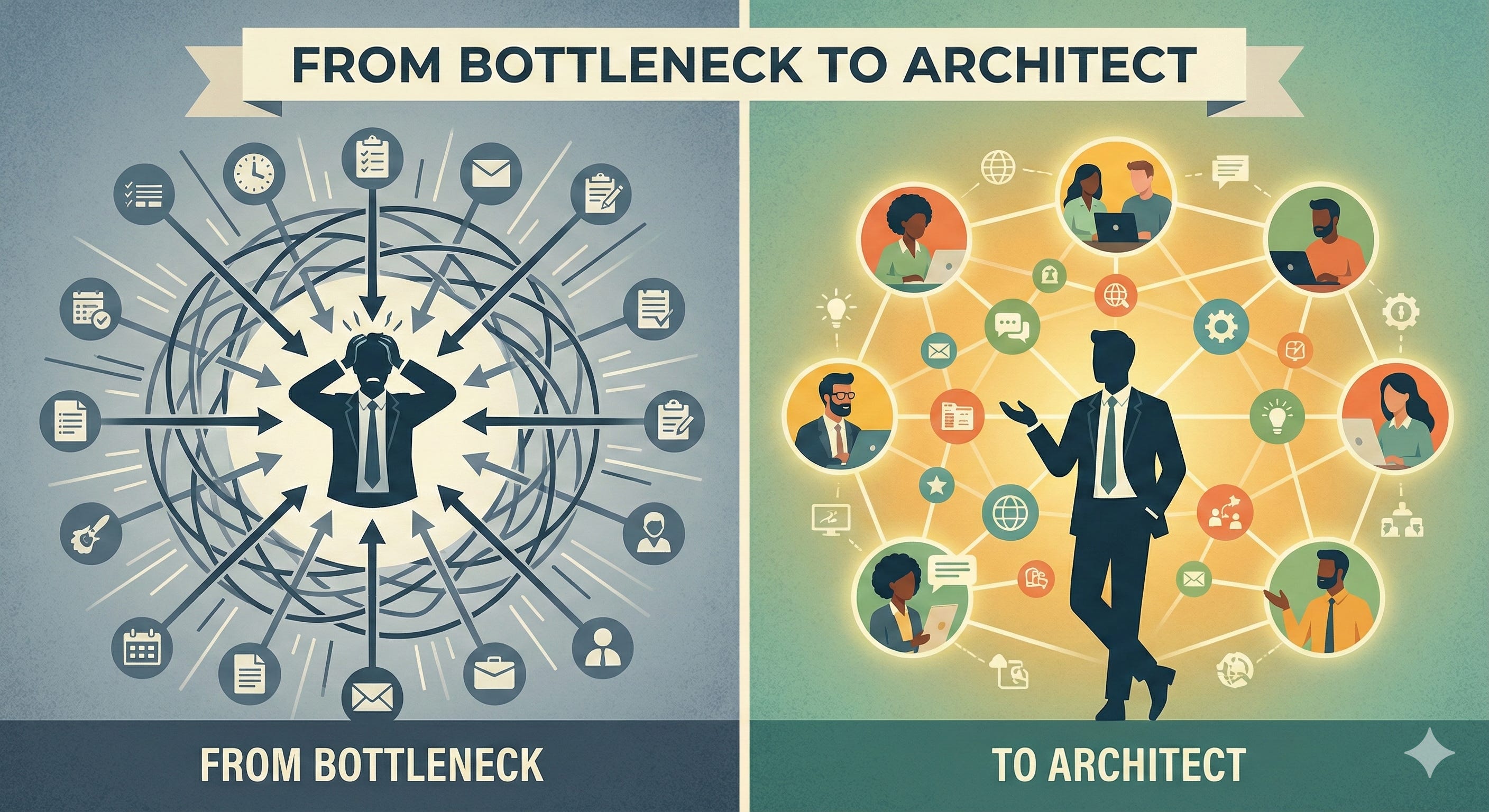
System Overview: The Strategic Declination Framework
The framework I’m about to share with you is a repeatable system to stop being the single point of failure and start scaling your impact. It’s designed to do four things:
Make you aware of your own ‘Hero Syndrome.’
Reframe requests as valuable data about organisational weaknesses.
Systematically redirect workflows to build resilience.
Use refusal as a powerful coaching and mentoring tool.
This isn’t just about delegation. Delegation is giving someone a task. Strategic Declination is giving your entire organisation the ability to function without you. It’s the only way to truly lead transformation.
Prerequisites: The Mindset Shift
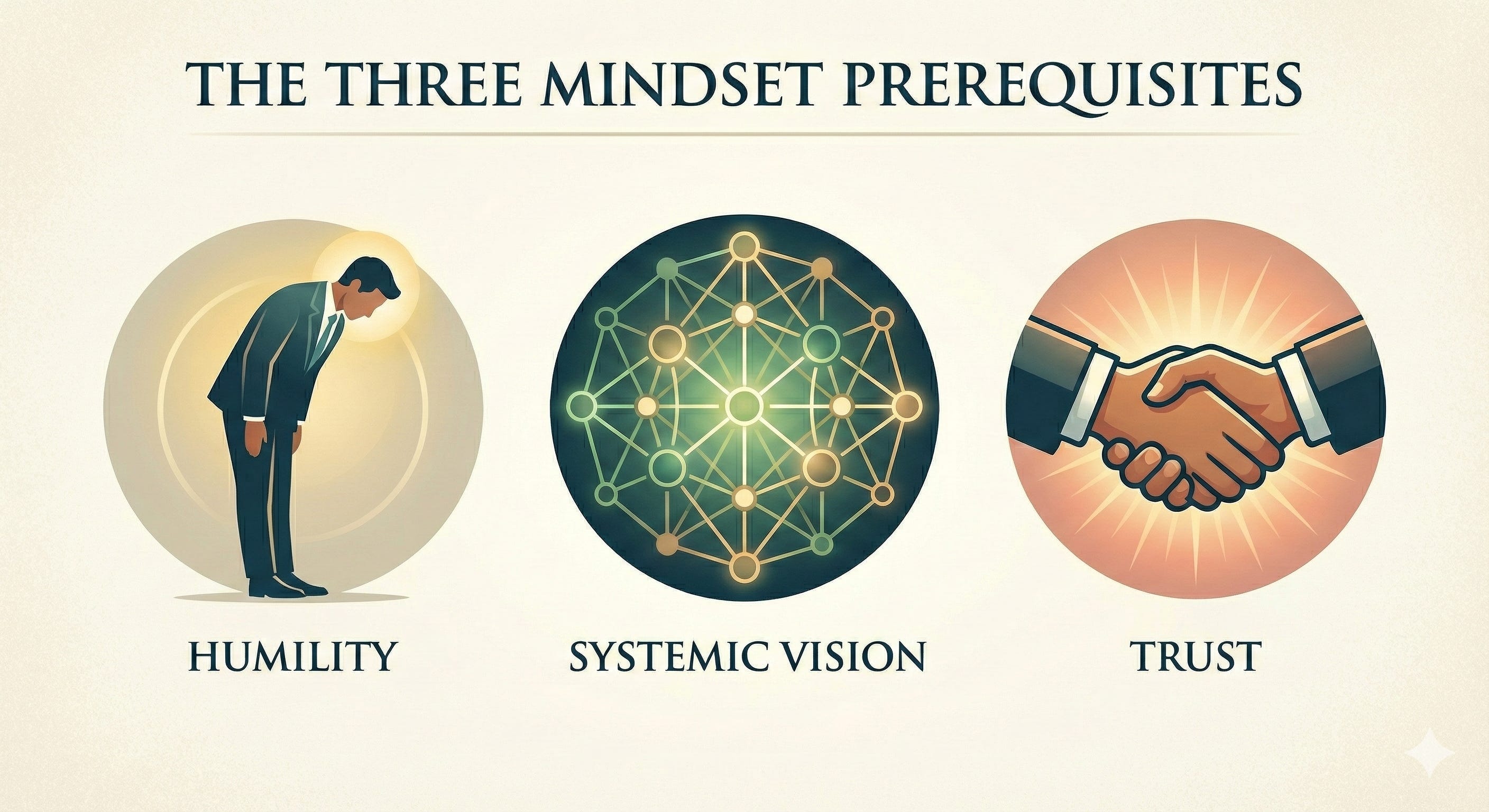
This system requires no software, no budget, and no special authority. It only requires a fundamental shift in your leadership mindset. Before you start, you must commit to three principles:
Radical Humility: The ego loves being the hero. You must accept that your primary value is not in having the answer, but in building a system that produces the answer. Your success is measured by how little you are needed day-to-day.
Systemic Vision: You must train yourself to look past the presenting problem. When someone asks for a file, they aren’t just asking for a file. They’re revealing a flaw in your knowledge management system. You need to operate with a ‘varifocal vision,’ seeing both the immediate need and the long-term structural gap.
Unwavering Trust: You must trust your team. They will not do things exactly as you would. They will make mistakes. That is the price of growth. Your job is to create psychological safety for them to try, fail, and learn without you swooping in to rescue them.
Now, let’s start with step one.
Step 1: Diagnose Your ‘Hero Syndrome’ with a Request Audit
The first step to solving a problem is admitting you have one. You need data. For the next five working days, conduct a Request Audit. Create a simple log and capture every single request that comes directly to you. For each one, note the request, who it came from, and categorise it:
Type K (Knowledge): The request was fulfilled with information that only you possess. Example: “What was the final decision from the Q2 offsite?”
Type A (Authority): The request required a sign-off or permission that only you hold. Example: “Can you approve this expense for the new software license?”
Type F (Faster): The request was for something someone else could have done, but it was just faster or easier for them to ask you. Example: “Could you send me the link to the latest marketing deck?”
At the end of the week, review your log. The majority of requests are typically Type F and Type K. This log is not a to-do list; it’s a map of your organization’s dependencies on you.
Step 2: Redirect, Document, or Delegate
With your audit data in hand, you can stop reacting and start responding strategically. For every new request, consciously choose one of these paths instead of just answering it:
Redirect (for Type F): Your new default response should be a question that teaches them how to fish. You’re not refusing to help; you’re coaching them toward self-sufficiency.
Phrases to Use:
“Good question. Let’s find the answer in the project wiki so we both know where it lives for next time.”
“I believe [Teammate’s Name] is the point person for that. Can you check with them and let me know if you still have questions?”
“Where’s the first place you’d think to look for that? Let’s start there together.”
Document (for Type K): Answer the question one last time, but do it in a shared, public, and searchable location (like a Confluence page, a team Wiki, or a shared document). Then, send the link. You are turning your brain into a system.
Phrases to Use:
“Great question. I’ve just documented the answer here [link]. Let me know if that’s clear.”
“I’m creating a FAQ for this project and just added that. You can find it here [link]. This will be our source of truth going forward.”
Delegate (for Type A): Challenge the premise that only you can grant authority. True empowerment isn’t just about handing off tasks, but also authority.
Phrases to Use:
“For expenses like this under $500, you are pre-approved. Please proceed and just log it.”
“I’m empowering [Team Lead’s Name] to make the final call on these decisions. Please run it by them.”
Step 3: Architect the Systemic Fix
Step 2 is about managing inbound requests. Step 3 is about eliminating them permanently. Look at the patterns in your Request Audit. These are symptoms of a broken system. Your job is to become the architect of a better one.
If you get constant Type F requests for links: Your file management system is weak. Schedule time to organize it, create a clear index, and train the team.
If you get constant Type K requests about project status: Your project communication cadence is failing. Implement a weekly status email, a public dashboard, or a more structured check-in meeting.
If you get constant Type A requests for minor approvals: Your delegation of authority is insufficient. Redefine roles and decision rights to push autonomy further down the chain.
This is the hard work of building processes, clarifying roles, and creating infrastructure. It’s moving from firefighter to city planner.
Step 4: Coach Through the Friction
As you implement this, you will encounter resistance. Your team is used to getting quick answers from you. When you start redirecting, it will feel like friction. They might get frustrated. This is a critical coaching moment.
Don’t just decline; explain the new social contract. Reframe the interaction from a simple transaction to a lesson in self-sufficiency.
When they say, “But it’s just faster if you tell me...”
Your Response: “I totally get that, and I have the answer. But my most important job is to build a team that can operate without me. Let’s take 5 minutes and find the official source together so we all know for next time.”
When they seem hesitant or afraid to make a decision...
Your Response: “I trust your judgment on this. What is your recommendation? I will back you up.”
When they bring you a problem without a proposed solution...
Your Response: “Thanks for flagging this. Before I weigh in, I’d love to hear your thoughts. What are one or two options you’ve considered?”
Troubleshooting Common Pitfalls
Transitioning from hero to architect is rarely seamless. Here’s how to handle two common challenges:
1. What if my team resists or thinks I’m being unhelpful?
This is a sign you need to be more explicit about your intentions. Frame the change not as something you are doing to them, but for them and the organization. Host a team meeting and say, “My goal is to remove myself as a bottleneck and empower each of you. This means that when you ask me a question, I’m often going to redirect you to a system or another person. The initial friction is part of how we build a stronger, more independent team. I need your partnership in this.”
2. What about a genuine, time-sensitive emergency?
Strategic Declination is not about blindly following a process during a crisis. If the building is on fire, you put out the fire. Give the answer, make the decision, and solve the immediate problem. However, the key is the post-mortem. After the emergency is resolved, ask the systemic question: “What system or process failed that required my direct intervention? How can we fix it so this type of emergency doesn’t happen again?” Use the emergency as a powerful data point to inform the architecture you’re building.
From Hero to Architect: The Only True Scaling
Leaving the hero role behind is an act of ego-suspension. The dopamine hits will fade. Your success will become quieter, measured not by the number of fires you extinguish, but by the lack of fires to begin with.
By diagnosing your dependencies, redirecting requests with clear and empathetic language, building robust systems, and coaching your team through the transition, you do more than just free up your own time. You build a resilient, capable, and empowered organization that can scale beyond the limits of a single leader. You stop being the hero and start being the architect of a legacy.
Thanks for reading
If value-driven delivery resonated with you, here are three ways to go deeper:
Listen to the full conversation: This article was inspired by insights from my Future of Work podcast.
Hear the complete discussion about temporal intelligence and real practitioner stories →
Get weekly frameworks: Join 2,400+ transformation leaders who receive my newsletter every week. Each edition includes one actionable framework you can implement immediately to build agile leadership capabilities in the knowledge economy.
Subscribe for free insights → Subscribe Now
Work together: I help C-level executives and transformation teams navigate digital change and build varifocal leadership capabilities. Book a strategic conversation
New to the Future of Work insights?
Start here: Use AI to Accelerate the Boring Bits and Get To The Good Stuff - it’s been shared by 500+ senior leaders and shows you how to use AI to get the right things done
Already part of the community? Hit the ❤️ if this was valuable and share it with one colleague who’s struggling with temporal leadership challenges. The best insights come from peer discussions in the comments below.
Why do you think being the go to heros is good idea for your health? I read every comment and often turn your questions into future articles. Let me know what you’re wrestling with.
P.S. Next week I’m diving into “You Are the Product Owner of You: Taking Complete Control of Your Professional Growth”. Make sure you’re subscribed so you don’t miss it.